

Venture studios have been getting a lot of attention in recent years, and for good reason. The data suggests they produce startups with significantly higher success rates than the traditional accelerator or incubator model. But most examples you read about are in tech or fintech. I’d been curious what a venture studio would look like in food and agriculture, an industry where the path from idea to market is long, capital-intensive, and full of physical constraints.
Then I came across the HortiScience Innovation Center (HIC) in Bleiswijk, and what struck me was not just the studio itself, but how thoughtfully the whole thing was designed. Five founding partners, each with a different reason to be there, but all perfectly complementary. A director in Loet Rummenie who spent years at StartLife, one of the Netherlands’ leading agrifood accelerators, and who clearly learned what works and what doesn’t from watching hundreds of startups succeed and struggle. And a sector, greenhouse horticulture, that desperately needs it. Dutch greenhouse horticulture is one of the country’s most impressive industries. The precision, the yields, the technology. But the model has cracks. It relies on repetitive manual labor. It runs on fossil-based inputs. It follows a linear seasonal cycle where all inputs, from substrate to plants, are shipped in at the start of the year and discarded at the end. Nothing loops back. It is not circular in any meaningful way. As the sector grows worldwide, driven by climate change and food security, these cracks are only getting bigger.
I spoke with Loet to understand how the studio works, why he chose an unconventional model, what the first ventures look like, and where he sees the biggest uncertainties.
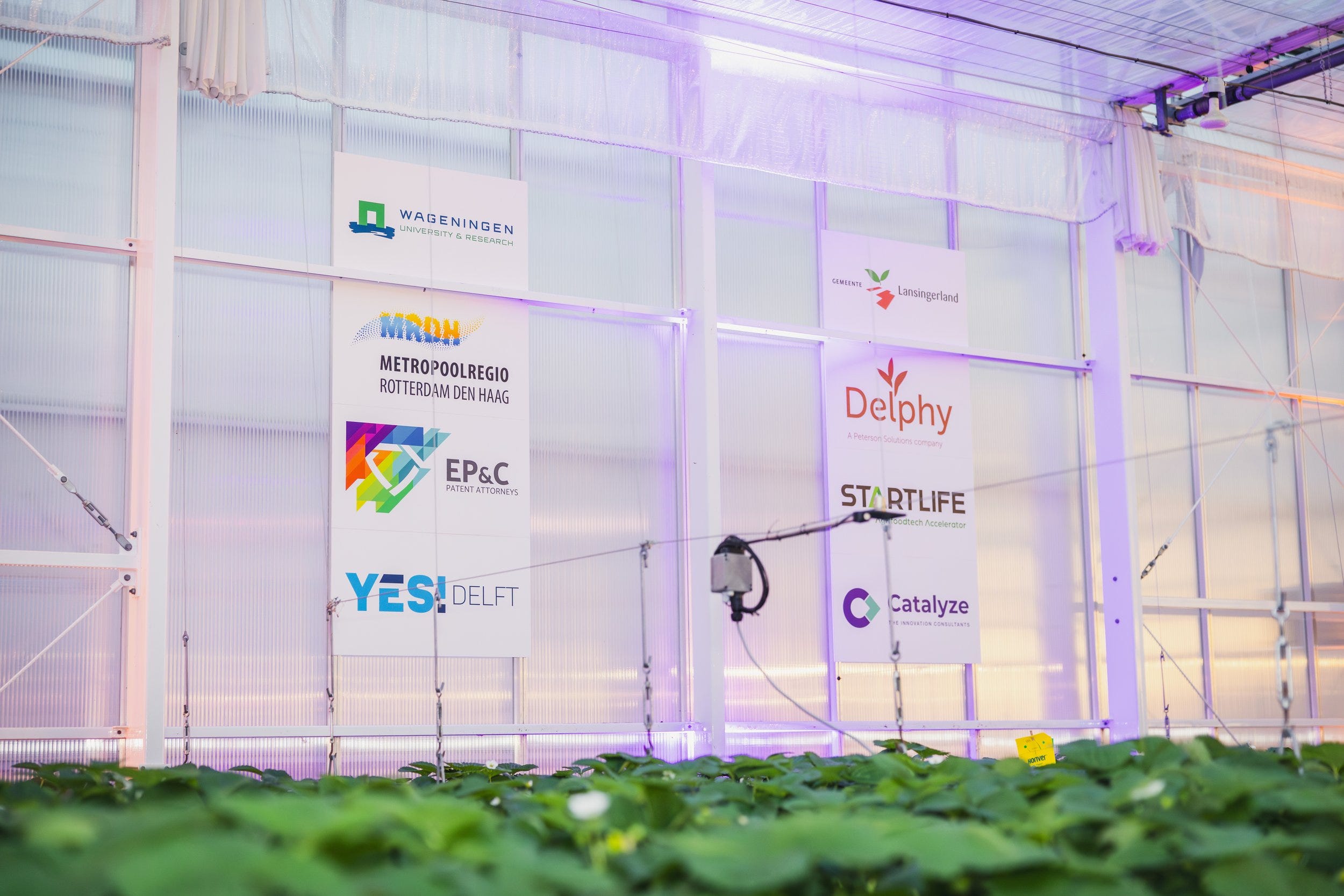
Five founding partners, five different reasons to be there
You’ve brought together five founding partners: Wageningen University & Research, Delphy, YES!Delft, StartLife, and the municipality of Lansingerland. They all seem to want different things. How did you align them?
The key insight is that they don’t need to want the same thing. Wageningen University & Research (WUR) and Delphy Improvement Center are both knowledge institutes. WUR is more focused on education and fundamental research, whereas Delphy is more the link between research and the growers. Both produce an enormous amount of knowledge, but neither is set up to turn that knowledge into new companies. That’s the gap we fill.
For YES!Delft and StartLife, two of the leading startup accelerators in the Netherlands, the challenge is different. Their startups constantly ask: ‘Can we trial somewhere? Can we get access to a real greenhouse?’ That’s what we provide.
And for the municipality of Bleiswijk, the incentive is economic. About a third of jobs in the municipality are related to horticulture, and many of them are knowledge-intensive. Making the sector future-proof is crucial for the region. They recognized four or five years ago that research alone was not going to be enough. Someone needed to take innovation from the lab to the greenhouse floor, and the municipality rightfully spotted that opportunity.
So everyone has a different reason to be at the table, but everyone needs HIC to get what they want. That makes the partnership robust. Beyond the founding partners, there’s also a wider ecosystem of investors, subsidy consultants, IP advisors, and growers that help the studio and its ventures get off the ground.
The Venture Studio model: lean, mean, and unconventional
Let’s get into the Venture Studio itself. How does it work?
At HIC we run what’s called a Venture Studio. We didn’t invent the model. Over the last two to three years, also in my previous role at StartLife, I’ve spoken with many other studios, trying to learn what works and what doesn’t. We then fine-tuned it for greenhouse horticulture.
The most important part of the studio are the entrepreneurs. These are people that can bring something from zero to one. People that can actually create stuff out of nothing. That’s our most important asset, and also our most important challenge: finding the right people to make these transitions happen.
You chose a model where HIC doesn’t take equity in the startups it creates. That’s unusual for a venture studio. Why?
I’ve spoken to many founders that were part of other studios, and also many investors that invested in companies that came out of a studio. And many of them were complaining. The studio had too big a share in the company, so the company was no longer investable. Founders couldn’t find funding because potential investors looked at the cap table and walked away.
So we said: we are not going to take a share in any of the companies. Instead, we chose a revenue share model. If a company becomes successful and starts generating significant revenue, we’d like to see a small percentage of that revenue flow back to the studio, up to a reasonable cap. That money goes directly into building new companies. As a consequence, if we are building a unicorn, we will not become filthy rich. And we are fine with it. That’s not our role. Our role is to build new companies, facilitate the process, and speed up innovation in this industry.
But then how do you create skin in the game for the entrepreneurs? If one entrepreneur is working on venture A, why would they care about venture B?
That’s the second part of the model, and I think it’s the most powerful one. We’ve installed a shared ownership structure. Every entrepreneur that starts a company in the studio becomes a member of a cooperative. And the cooperative takes 10% equity in every company that is built in the studio.
So as an Entrepreneur in Residence, you have a direct share in every company being built. Not only today, but also in five years from now. When you’re listening to someone pitch a new idea, you’re not just listening passively. You have an active approach, because it’s also your company. You have every reason to provide critical feedback, and if you believe the idea is good, every reason to help make it a success.
This has been confirmed by the entrepreneurs who are now joining. They find it super powerful.
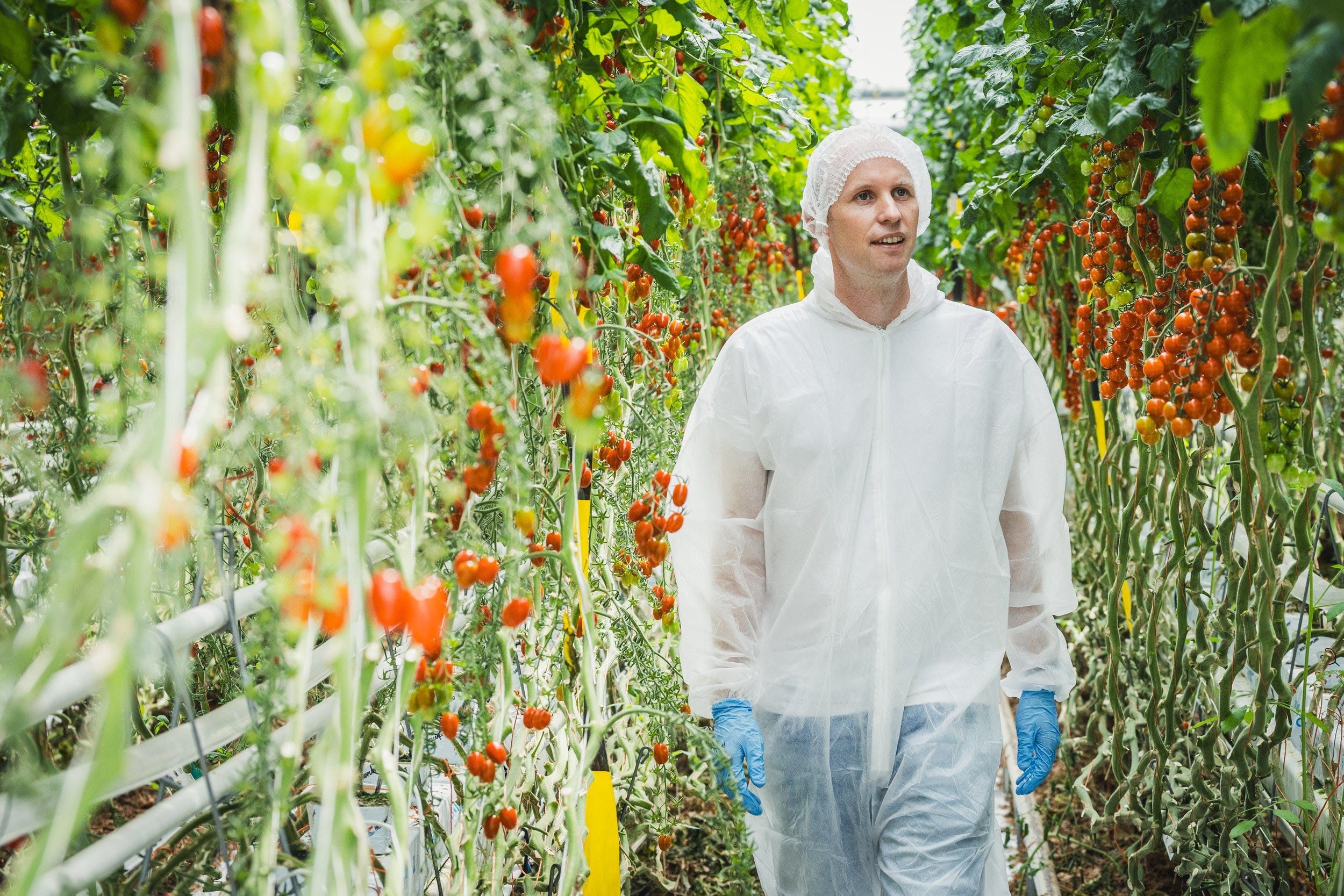
The entrepreneurs: from mining to horticulture
Where do these Entrepreneurs in Residence come from? What kind of people thrive in the studio?
We’re looking for experienced entrepreneurs who have done it before, who know the job, and who have either an interest in this sector or experience in it themselves. Having industry experience helps because it means you already have a network and can fast-validate certain assumptions.
We now have 11 entrepreneurs in the studio. They work in three phases: ideation, validation, and incorporation. We currently have five cases in validation, and the first one will be incorporated soon.
What’s really cool is the diversity of backgrounds. We have a guy who worked 10 years in the mining industry and knows everything about autonomous vehicles, because in mining, a lot of things are already autonomous. We have someone with 30 years of experience in horticulture. Someone who built a scale-up in food extraction and processing. That range of expertise is incredibly helpful when you want to create something new, because you can validate ideas super fast.
Can you give an example of that speed?
We had a venture idea that we were exploring. In a matter of two weeks, we concluded it was not a good idea to proceed with it. But in those two weeks, we had talked to all the major retailers, major growers, and the traders of fruits. Because every entrepreneur brings their own network and their own expertise, you can really validate an idea quickly. And equally important: you can kill it quickly. That’s powerful.
Do the entrepreneurs come in with their own ideas, or do they join ideas that already exist?
Both. Some come in and say, ‘I’d rather join an existing idea.’ Others already have something in mind. The ideation phase works through what we call Pitch Friday. Every second Friday, we come together in person. We invite speakers to pitch ideas they want to bring into the studio. It’s very low-key. People often bring cookies. But it’s an effective way to keep the pipeline of new ideas flowing.
Is this a full-time commitment for the entrepreneurs?
No, and that’s by design. Most of the entrepreneurs we want are not sitting on the couch waiting for my call. They are either selling their current company, active in their industry, or doing consultancy work somewhere but getting bored because all they do is make PowerPoints. And once the PowerPoint is presented, their job is done. These are people looking for a new adventure, and the studio gives them that.
And if you’re reading this and thinking this sounds interesting: you don’t need to be an expert in horticulture. You can be an expert in AI, in robotics, in whatever industry. As long as you’re passionate about the field, get in touch.
Inside the ventures: humanoids, pharma crops, and sheep wool
Can you walk me through some of the ventures the studio is working on?
At this stage, I don’t believe in keeping ideas behind closed doors. They’re too early for that, and the more input we get, the better. Your idea is often already around in at least five other places in the world anyway. So I’m happy to share.
One of the ideas we are exploring is around robotics and automation. We think there could be a role for humanoid robots in greenhouse horticulture. Specifically, we think we can build a staffing agency that hosts a fleet of humanoids as flexible assistants for greenhouse staff.
Not for the repetitive tasks like picking tomatoes or cucumbers. Those already have dedicated solutions being developed. But for all the other stuff you need to do in a greenhouse. I haven’t seen a humanoid in a greenhouse yet. We’re about to buy one and put it in our greenhouse to see: can it walk there? Can it deal with the light? Can it handle conditions that humanoids are probably not trained for yet?
What’s another venture you can share?
We’re exploring whether we can grow active pharmaceutical ingredients, so-called APIs, in plants inside a controlled environment. Two entrepreneurs are working on this: one has a horticulture background, the other has an extraction background. It’s a perfect combination for this type of company.
The idea is to look at crops that can produce active compounds for the pharmaceutical industry. You can think of crops like poppy, but also many others. This could be a completely new wave of crops specifically suited for a controlled environment like a greenhouse: safe, high quality, with full climate control. And it’s hugely important for Europe, because right now we’ve largely outsourced pharmaceutical ingredient production to India and China. COVID taught us that we don’t want to rely on those fragile supply chains. We’re working with breeders and pharma companies on this.
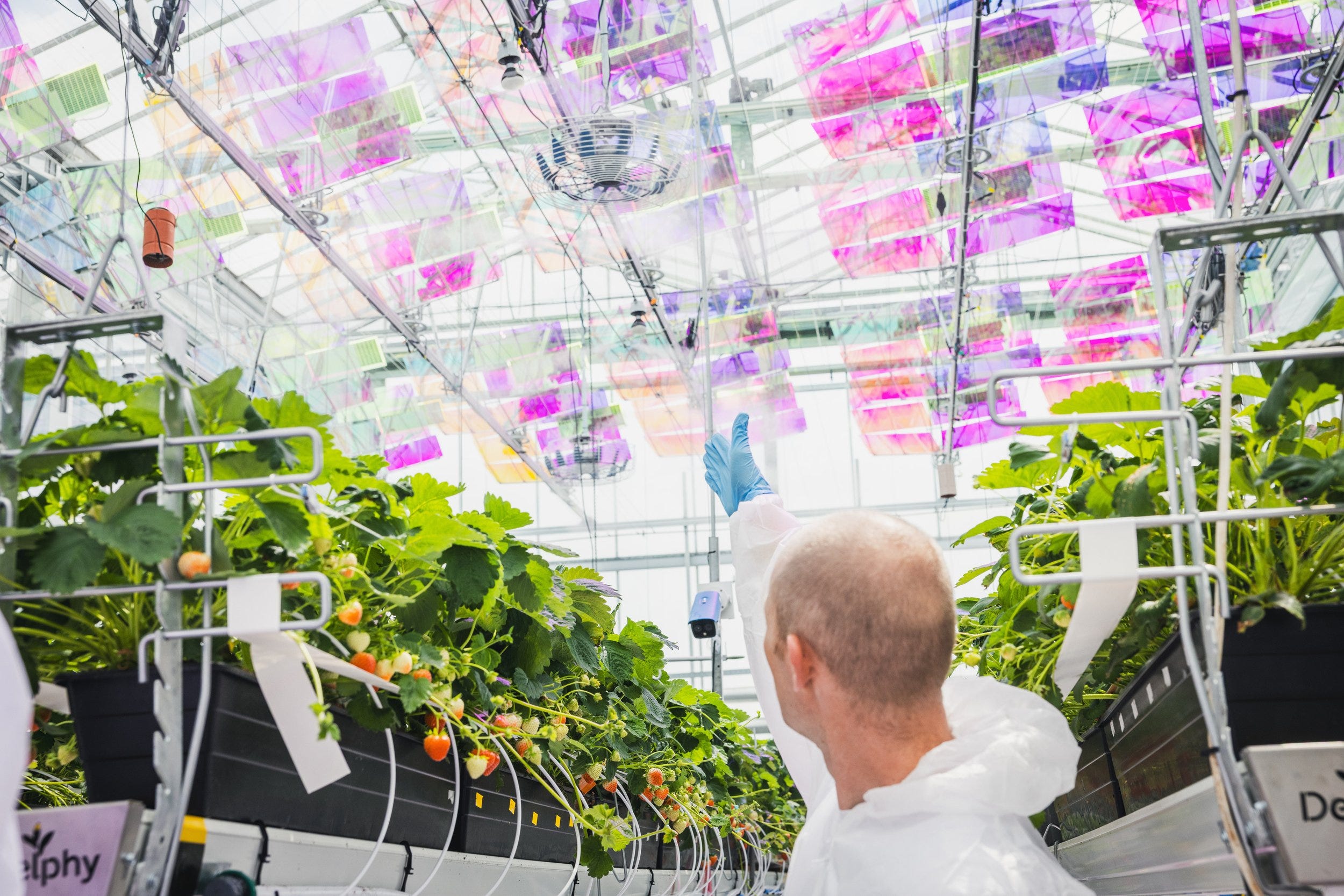
Why you shouldn’t rush to the notary
These ventures sound promising, but you’re clearly cautious about moving too fast. Why?
The substrate industry in greenhouse horticulture, is a good example. That market is going to triple in the coming 25 years. Massive. And it still relies heavily on peat, which we want to move away from. So we’re running a small trial with sheep wool to see if it can replace part of the volume. But we still have all kinds of open questions about the application. About functionality. We are really starting up and learning.
It can be very tempting to say, ‘This is going to work!’ But if you rush into it, register at the notary, start fundraising, and then two years later figure out your core assumption was wrong, you’re in trouble. We don’t want to rush the validation phase. That means testing the idea, but also building the right team around it. Both need to happen before you go to the notary.
This is where our location gives us a real edge. We are physically based at a site with 120 researchers who work on greenhouse horticulture every single day. If you want to know about the microbiome in hydroponic systems, there are multiple researchers here who did their PhDs on exactly that. Any question you have, you can just check in with them. If an idea resonates with the market, we can quickly do a small trial, check in with the researchers, and iterate. That’s not possible, or at least much more difficult, in most other places.
The numbers behind the studio
What does success look like for the studio?
We’ve set an ambitious goal: three new companies per year, of which one should be successful in the long run. In the startup world, they say nine out of ten companies fail. Studios tend to do better, maybe six out of ten. We think we can push that further, because we do the validation and team building before we actually found the company. So by the time a company goes to the notary, we’re quite convinced there’s a real chance, let’s say 33%, that it will contribute to the industry for the foreseeable future.
To get to those three incorporations, we need roughly three validation cases per company. So you’re looking at nine or more ideas entering the validation funnel each year.
The studio currently runs on public funding. Can you elaborate on how the financials work?
Happy to, because I think others can learn from it. The Metropole Region Rotterdam The Hague is funding the studio for its first three years. On top of that, the founding partners provide an in-kind investment, bringing the total budget to around 1.1 million euros.
That budget is really just for building the program: covering our time, hosting events, finding the right people. The model is designed to become self-sustaining. Once the companies we create start generating revenue, the revenue share flows back, and with that we can build new companies and finance the studio itself. Our job is to make the studio a success. And then the success pays for the next round.

Why startups fail in horticulture
Having worked with many startups at StartLife, what’s the main reason they fail in this industry?
Most of them don’t solve a real problem. They’re born out of a cool technology gadget. The amount of companies you see that have a technically interesting product but don’t actually solve a problem a grower cares about is staggering.
It’s also hard to see it when the company is sitting right in front of you. But I think it’s super important that you tell people: please validate it. Please check with customers. Are you solving a real problem, or are they just being nice to you?
How do you distinguish between genuine enthusiasm and politeness?
That’s incredibly difficult. When you’re doing it yourself, it’s so tempting to interpret a friendly response as validation. You want to hear that your idea is great. But the question you should always be asking is: are people being nice to me, or are they really excited about the problem I’m trying to solve? That remains one of the hardest parts of proper validation, even for experienced people.
People often say the horticulture industry is conservative. Do you agree?
I say this everywhere I can: I don’t agree. I think the growers are just very good growers. You must have something really good in order to convince them to change the way they operate today. But if it’s good? They’re all ears. They’re happy to invest. They take big risks when they see an opportunity.
The problem is that most technology companies come with a product that’s simply not ready for them yet. So it’s not conservatism. It’s a technology readiness gap. And managing expectations on both sides is important.
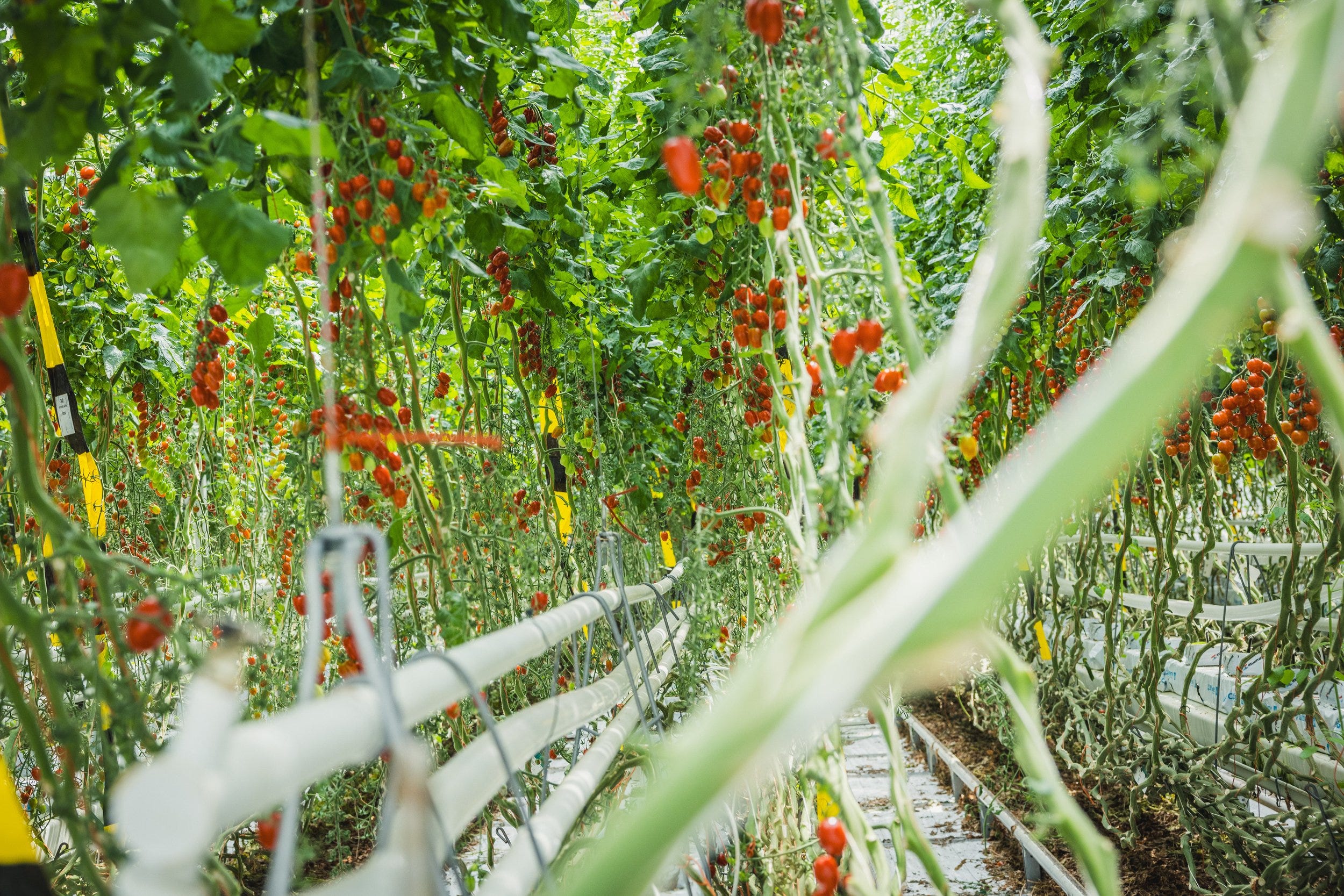
The biggest risk: losing the institutional memory
Let’s look five years ahead. Worst case scenario: the Venture Studio has failed. What went wrong?
The connection to the market. That’s the most tricky part. I think we can attract cool, good entrepreneurs who bring something from zero to one. But the real connection to the problem in the market is something we still need to prove as a studio. And if you look at other studios, this is their biggest challenge too.
These industries are so advanced that if you introduce something new, it’s probably already been tried. Our studio will only be successful if we manage to build what you could call institutional memory: saving all the learnings that have been done by the industry. If we don’t manage that, it will be more like a one-off. And I don’t hope it looks like that.
Looking back at the first six months, what has been harder than expected?
One thing stands out. We thought in the beginning that there would be a lot of IP lying around with companies and research institutes, and that they’d be happy to hand it over so we could build companies out of it. In practice, we’ve seen very few propositions with hardcore IP.
And if hardcore IP is lying around, it probably has a reason it lies there. We anticipated that maybe half of the propositions would be IP-heavy. In reality, nine out of ten are more like market opportunities: problems we see that we think we can develop a solution for, rather than existing technology looking for a market.
We are, as I like to say, driving a race car while we don’t know how to steer it yet. But I believe you have to start. That’s the basis. And then you learn along the way.
Thanks for the talk, Loet!